
Comparison
What makes platform work different
· 4 min read
A flat deck and a set of risers. No moving parts. It is still the one thing that separates a step class from every other choreographed class.
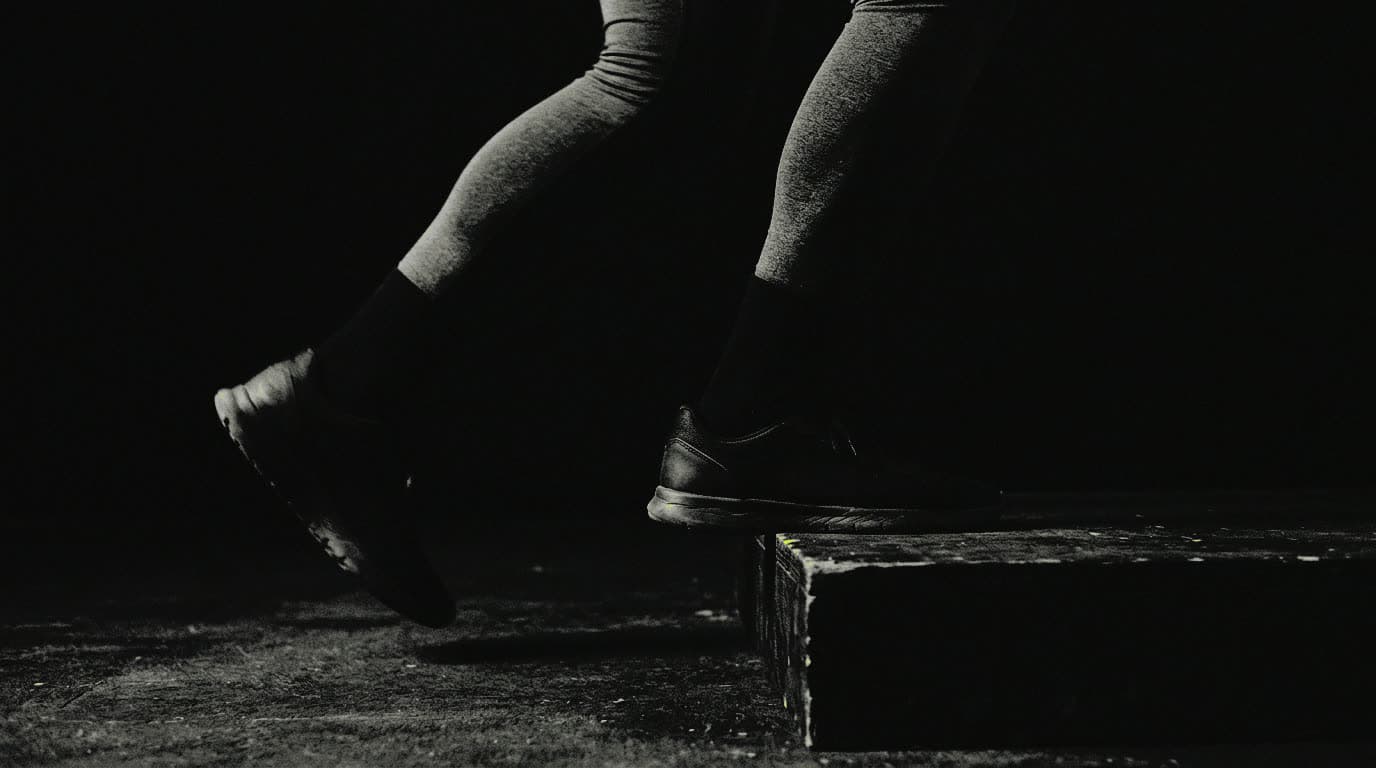
A step platform is an unglamorous object. A flat deck, a set of risers, no moving parts. It is also the single thing separating a step class from every other choreographed fitness class, and the difference is larger than it looks.
You lift your body weight, on purpose, several hundred times
A step-up is a compound movement. The lead leg extends the hip and the knee against gravity to raise everything above it, then controls the descent on the way back down. Do that on a four-count for most of 55 minutes and you have done several hundred repetitions of loaded, single-leg work — with no machine, no weight, and nobody counting reps out loud.
That is the whole trick. The platform smuggles a basic resistance pattern into a class that feels like dancing.
The height is a dial nobody else controls
Raising the deck increases the range of motion of every repetition. A higher platform means a deeper hip and knee bend, so more work per step, at the same tempo, with the same choreography. A review of bench/step exercise in Sports Medicine puts it plainly: the energy cost of step exercise varies dramatically, and the selected step height is one of the factors that decides it.
This is genuinely unusual. In most group fitness the intensity is set by the instructor and the track: you go at the room's pace or you sit down. A step class hands you the dial. Deck flat on the floor is a real option and always has been, and so is taking the platform out entirely and doing the choreography on the floor.
Continuous, not interval
Step choreography runs. There is no rack to walk to, no machine to swap onto, no rest between sets. Once a block is taught, the room moves for the length of the track, and blocks run back to back.
Two consequences. Your heart rate goes up and stays there rather than spiking and dropping. And it is low-boredom, because the thing telling you when to move is music rather than a clock.
Half of every repetition is a descent
Stepping down under control is eccentric work — the muscle lengthening while it resists. The quadriceps and glutes take most of it. It is the same thing your legs do walking down stairs, and it is a large part of why a step class shows up in your legs the next day. There is a muscle-by-muscle breakdown if you want it.
The trunk is working the whole time
You are turning, changing direction and shifting weight from one leg to the other on a raised surface. Staying upright through that is trunk and hip work by definition. It is not an ab exercise and we are not going to sell it as one — it is simply what happens when you stand on one leg on a deck a few hundred times.
What it does not do
Platform work is not heavy strength training. There is no progressive load beyond deck height and your own body weight, and nobody should arrive expecting a squat rack. If maximal strength is the goal, this complements it rather than replacing it.
Saying that plainly is more useful than claiming otherwise.
The choreography matters as much as the deck
A platform on its own is a step-up test. What makes it a class is everything happening above the waist — turns, arms, direction changes, and music with a pulse you can hear across the room. That is also the gap between this and the step class most people picture. At Stepfit the choreography comes from social dance rather than a fitness manual, and every class is posted with its music theme before you book it.
Is this class for you?
This is an impact class — you'll be stepping up and down on a platform for most of 55 minutes. If you have knee, hip, or ankle issues, check with your doctor first. The platform is optional, and the choreography works without it.
We supply the platforms and the playlist. 55 minutes, $19.95, at Casa 21 in Tampa.